
When Fluorescence Improves a Diamond
By Justin Smith, Graduate Gemologist · Hourglass Diamonds
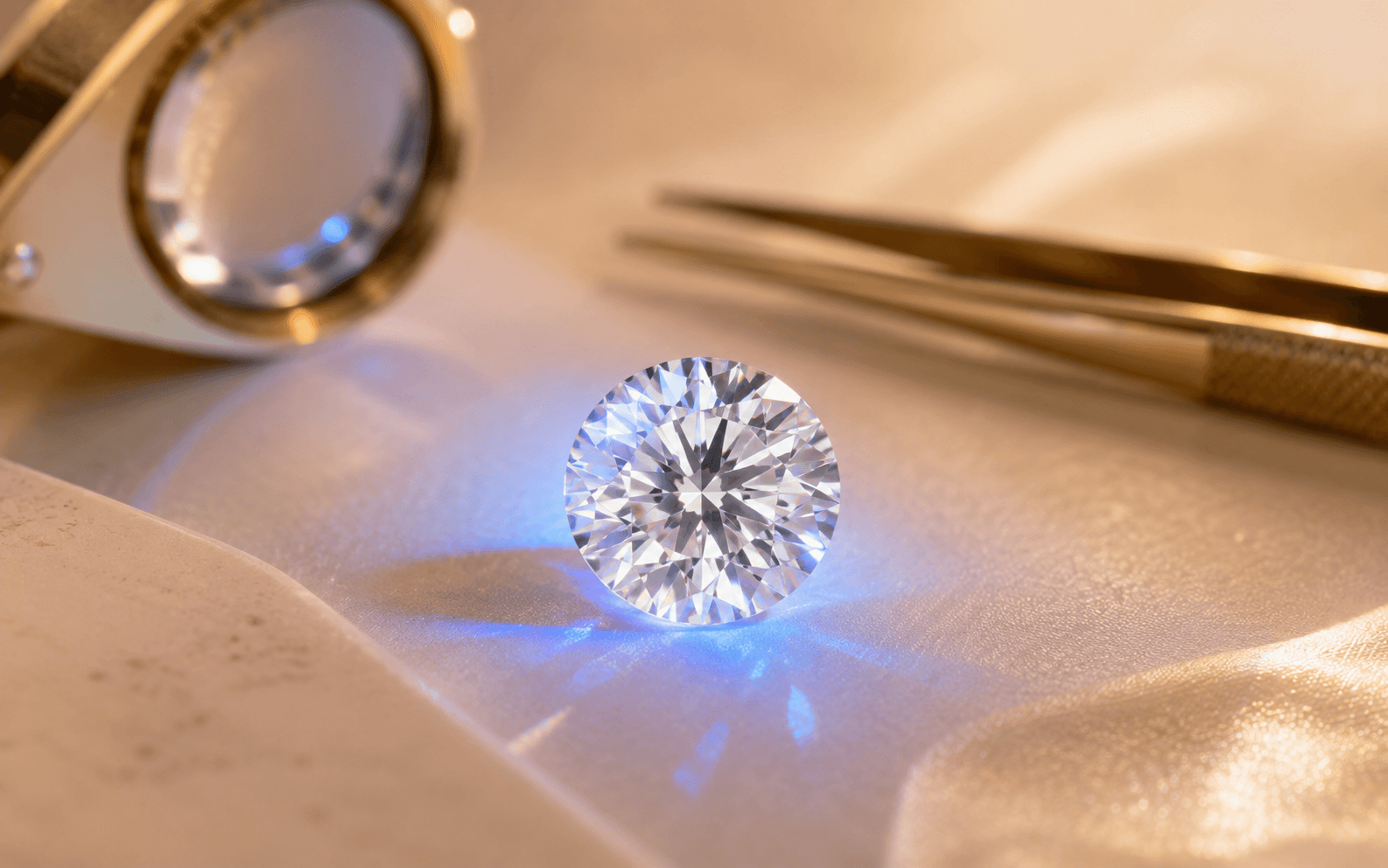
This article is for buyers who already understand what fluorescence is and want to know whether it helps or hurts a specific purchase. If you need definitions, the GIA scale, and report context first, start with what is diamond fluorescence.
Fluorescence is neither a free upgrade nor an automatic warning. It is a report line that sometimes aligns with beauty, sometimes with value, and occasionally with a reason to keep looking. The answer lives in the individual stone.
When Fluorescence Can Help
Blue fluorescence can interact with body color because blue and yellow are complementary. In diamonds with slight warmth, outdoor daylight can make a fluorescent stone look a touch whiter than you might expect from the color grade alone. The shift is subtle, not a full grade jump, but it can matter on the hand.
Near-colorless and faint-tinted stones are the most common beneficiaries. Buyers who compare fluorescent and non-fluorescent options side by side in daylight sometimes prefer the fluorescent stone because it faces up livelier, not because the report read better.
Pricing can help too. Fluorescence has historically carried unfair stigma. A beautiful stone with medium fluorescence may list below a similar non-fluorescent diamond, which can free budget for cut or setting without sacrificing appearance.
When Fluorescence Can Hurt
Very strong fluorescence deserves the most scrutiny, especially on high color grades where crisp whiteness is part of the appeal. A small percentage of stones can look slightly hazy or milky in certain lighting. Not every Strong or Very Strong diamond does. That is why the grade alone is an incomplete verdict.
High-color buyers pursuing D through F stones sometimes notice fluorescence more because any shift in transparency conflicts with why they chose that color range. If you are paying for top color, view the diamond in daylight and indoor light before you commit.
Cut can amplify or mask the issue. A dull stone with very strong fluorescence is still a dull stone. Fluorescence does not excuse weak light return. How diamond cut affects light performance explains why performance still comes first.
A Practical Decision Framework
Start with how the diamond looks, not with whether fluorescence makes you nervous. Compare it with a non-fluorescent stone at similar color and clarity. Move it near a window, then under indoor light. Ask whether it stays bright and crisp in both.
If you are working from listings, read the fluorescence line on the report, then ask what it might mean for this specific combination of color, cut, and price. For an original GIA, IGI, or supported GCAL grading report PDF for a round brilliant, Diamond Intelligence can place the documented grade in report context. When two finalists differ mainly by fluorescence, begin the conversation and compare them visually with a Graduate Gemologist.
Reject a stone when your eyes confirm haze, milkiness, or flatness. Do not reject it because a blog told you all fluorescence is bad. Our Approach at Hourglass treats fluorescence as one field among many, not as a shortcut around judgment.
Strong Blue Fluorescence in Context
Strong blue is the most common intense reaction gemologists record. It sounds dramatic on paper. In person it is often invisible outside UV demonstration. When it does influence appearance, the effect is usually about transparency in daylight, not a constant blue cast on the hand.
If your shortlist includes a strong blue stone at an attractive price, the work is confirmation, not avoidance. View it. If it wins the comparison, the fluorescence line may be the reason you got more beauty for the budget.
Fluorescence can improve a diamond when it softens warmth, frees budget, or simply coexists with excellent cut and clarity. It can hurt when it dulls transparency in a stone you expected to look icy white. The report starts the question. Your eyes and your setting finish it.
Related topics
Continue Exploring
If you would like this applied to your own diamond or ring, a private conversation is available.