
What Is a Pear Diamond
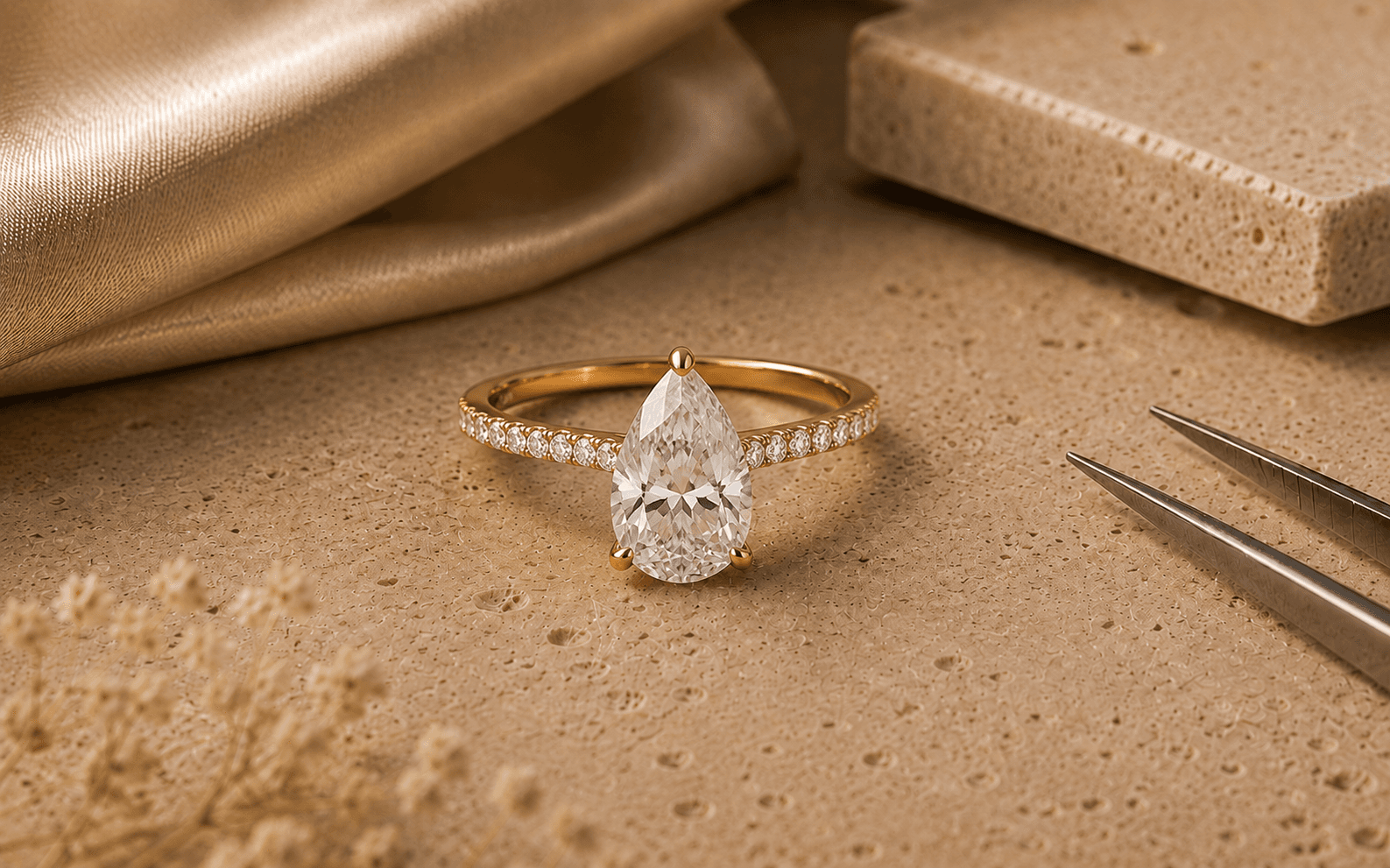
The pear diamond, sometimes called a teardrop diamond, combines the round brilliance of a traditional diamond with the elongated elegance of a pointed shape.
The outline features one rounded end and one tapered point, creating a silhouette that feels both graceful and distinctive. This balance of curves and angles gives the pear diamond a unique visual character.
Most pear diamonds are cut in a brilliant style, meaning their facets are arranged to reflect light and produce lively sparkle similar to round diamonds.
Because of its elongated shape, the pear diamond often appears larger than many other shapes at the same carat weight. This gives the stone a strong visual presence on the hand.
The History of the Pear Shape
The pear diamond has a long history in the world of gem cutting.
The shape was first developed in the 15th century by a Flemish diamond cutter named Lodewyk van Bercken. His innovations in diamond polishing allowed cutters to experiment with more complex shapes and facet patterns.
The pear shape emerged as a combination of two familiar forms: the round brilliant and the marquise. By blending the curved end of a round diamond with the pointed end of a marquise, cutters created a shape that felt both elegant and expressive.
Over the centuries, the pear diamond has remained a favorite in fine jewelry, appearing in everything from royal collections to modern engagement rings.
Why Pear Diamonds Appear Larger
Like many elongated diamond shapes, pear diamonds tend to appear larger than their carat weight might suggest.
Because the shape stretches along the finger, more of the diamond’s surface area becomes visible when viewed from above. This creates the impression of a larger stone compared to many round or square diamonds of the same weight.
The tapered point also directs attention toward the length of the diamond, further emphasizing its presence.
For engagement ring buyers looking for a diamond that feels visually substantial without increasing carat weight, the pear shape can offer an appealing advantage.
How Pear Diamonds Look on the Hand
Pear diamonds create a graceful and elongated look when worn on the hand. The tapered point draws the eye along the finger, and Diamond Studio can help you judge how different pear lengths feel before you see stones in person.
The shape naturally draws the eye along the finger, which can create a lengthening effect that many people find flattering.
In engagement rings, the pear diamond is most often worn with the pointed tip facing outward toward the fingertip. This orientation enhances the elongated visual line of the diamond.
However, some designs rotate the diamond in different directions for a more modern interpretation. Side-set pear diamonds or east-west settings can produce a distinctive and contemporary appearance.
Regardless of orientation, the shape tends to feel elegant and fluid.
Understanding the Bow Tie Effect
Like other elongated brilliant-cut diamonds, pear diamonds can display a bow tie effect.
This refers to a darker shadow that may appear across the center of the diamond when viewed face-up. The pattern resembles a small bow tie shape, which is where the term originates.
The bow tie occurs because of how light travels through the elongated facets of the stone.
Nearly all pear diamonds will show some degree of this effect. The goal is not to eliminate it entirely, but to select a diamond where the bow tie appears subtle rather than overly dark. What is diamond cut explains why visual light return matters more than a single fancy-shape cut grade.
A well-cut pear diamond should still display brightness and sparkle across the surface of the stone.
Protecting the Point of a Pear Diamond
One structural detail to consider when setting a pear diamond is the pointed tip.
Because this point is thinner than the rest of the diamond, it is slightly more vulnerable to impact if left exposed.
Most engagement ring settings include a protective prong that covers the tip of the diamond. This prong helps shield the point from accidental contact while maintaining the beauty of the shape.
With proper setting and everyday care, pear diamonds are perfectly suitable for engagement rings worn daily.
Jewelers simply recommend choosing a design that protects the tip while still allowing the diamond to remain visually open.
Choosing a Beautiful Pear Diamond
When selecting a pear diamond, symmetry plays an important role.
The curved side of the diamond should flow smoothly into the pointed end without appearing uneven. If the curves are unbalanced, the shape can feel slightly off-center.
Proportions also influence the personality of the stone. Some pear diamonds appear longer and more slender, while others feel slightly wider and softer in shape. How to read a diamond certificate shows where length-to-width and depth help frame that choice.
Finally, brilliance should remain lively across the diamond’s surface. A well-cut pear diamond will display bright reflections rather than dull areas.
When the shape and light performance work together, the pear diamond can appear exceptionally elegant.
The pear diamond offers a beautiful combination of brilliance and graceful shape.
Its rounded end and tapered point create a silhouette that feels fluid, expressive, and distinctive. At the same time, its brilliant-style faceting allows the diamond to produce lively sparkle.
For engagement ring buyers who appreciate elongated diamond shapes with a sense of movement and elegance, the pear diamond can be a compelling choice.
When carefully selected and properly set, a pear diamond can create an engagement ring that feels both refined and memorable. Begin with Concierge when you want help comparing pear length, bow-tie character, and setting protection.
Related topics
Continue Exploring
If you would like this applied to your own diamond or ring, a private conversation is available.