What Is a Cushion Cut Diamond
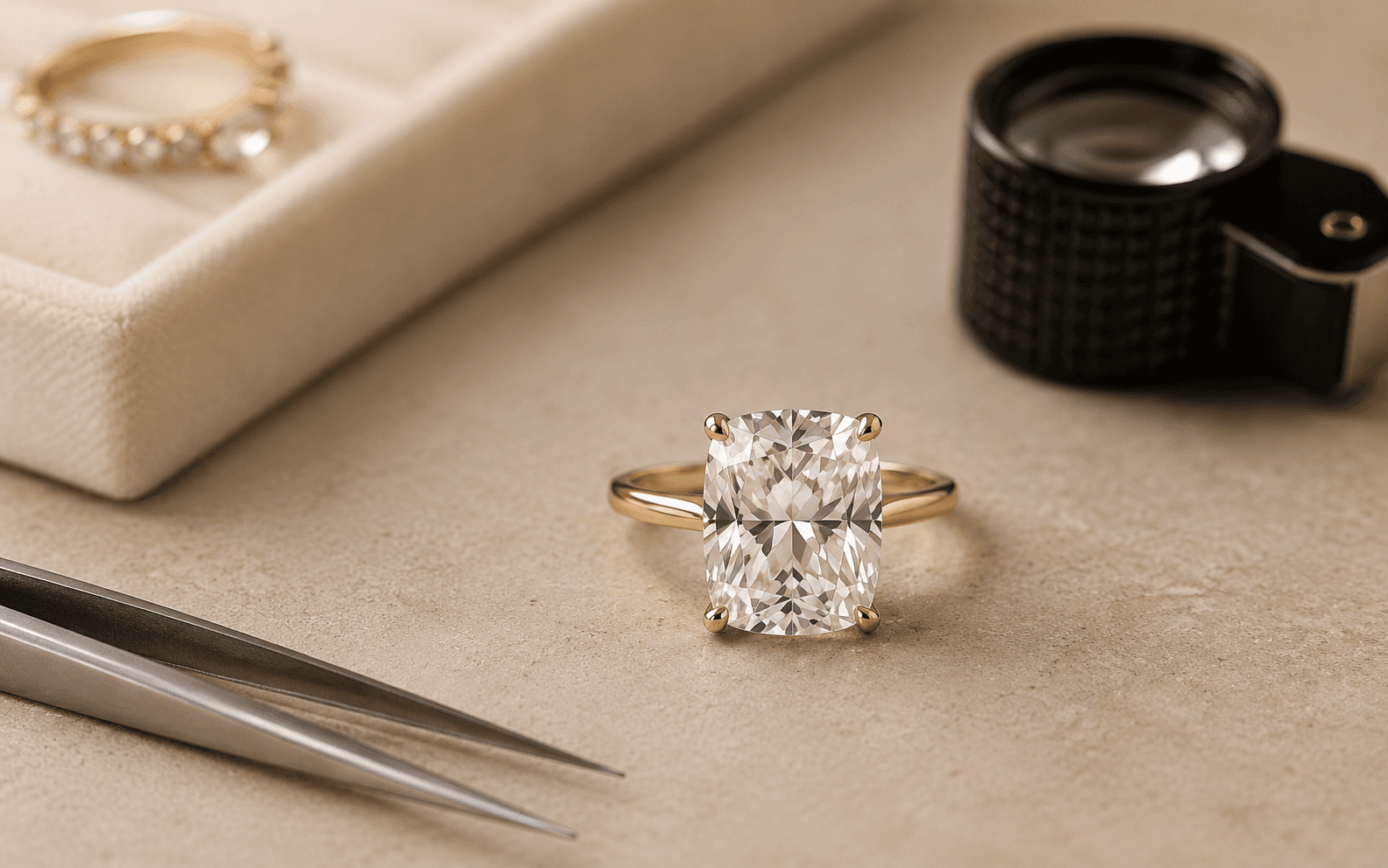
The cushion cut diamond is one of the oldest and most romantic diamond shapes still used in engagement rings today. Known for its softly rounded corners and pillow-like outline, the cushion cut blends vintage character with modern brilliance.
The name “cushion” comes from the shape itself. Rather than sharp corners or straight edges, the diamond has gently curved sides that resemble a cushion or pillow.
Most cushion diamonds are cut with brilliant-style faceting, designed to reflect light and create sparkle. Some versions of the cut emphasize larger facets that produce broader flashes of light instead of the smaller sparkles seen in round diamonds.
Because of its soft shape and distinctive personality, the cushion cut often appeals to buyers who appreciate both history and elegance.
The History Behind Cushion Diamonds
Cushion diamonds have a long and fascinating history in the world of jewelry.
Earlier versions of the cushion cut date back more than two centuries. These early stones were known as “old mine cuts,” a style that predated the modern round brilliant diamond.
Old mine cut diamonds were shaped to work with candlelight and softer lighting environments. Their larger facets produced gentle flashes of light that looked beautiful in those conditions.
Over time, the cushion cut evolved. Modern cushion diamonds maintain the same soft outline but often incorporate more advanced faceting patterns to improve brilliance.
This blend of heritage and modern cutting techniques is one reason the cushion diamond remains so beloved today.
How Cushion Diamonds Sparkle
Cushion diamonds can display different styles of sparkle depending on how they are cut.
Some cushion diamonds feature brilliant-style faceting that produces lively sparkle similar to round diamonds. These stones often appear bright and energetic under light.
Other cushion diamonds use larger facets that create broader flashes of light. Instead of many small sparkles, the diamond produces slower, more dramatic reflections as it moves.
Both styles can be beautiful. The difference simply comes down to the personality of the diamond and the preferences of the person wearing it.
Because of this variety, cushion diamonds often reward buyers who take time to view different stones and observe how each one handles light.
Shape and Proportions
Cushion diamonds are typically square or slightly rectangular.
Some stones appear nearly square, creating a balanced and symmetrical look. Others stretch slightly longer, which can give the diamond a more elongated presence on the hand. Something you can preview in Diamond Studio when comparing cushion proportions at the same carat.
Neither version is considered better than the other. Many buyers simply choose the proportions that feel most visually appealing to them.
What matters more is how balanced the shape appears. The curves should feel even, and the diamond should not appear overly narrow or overly wide.
When the proportions are harmonious, the cushion diamond tends to look soft, elegant, and well balanced.
Why Cushion Diamonds Feel So Romantic
Part of the appeal of cushion diamonds comes from their emotional character.
The soft outline feels less geometric than many other diamond shapes. Instead of crisp angles or sharp lines, the cushion diamond offers gentle curves that give the stone a warmer appearance.
This softness often creates a sense of vintage charm. Many antique engagement rings feature cushion-shaped diamonds, which reinforces their historical association with classic jewelry.
Because of this heritage, cushion diamonds are frequently chosen for engagement rings that aim to feel timeless, romantic, and slightly nostalgic.
For many clients, the cushion diamond strikes a beautiful balance between old-world elegance and modern sparkle.
How Cushion Diamonds Work in Engagement Rings
Cushion diamonds are extremely versatile in engagement ring design.
In solitaire settings, the diamond becomes the clear focal point of the ring. The rounded outline pairs beautifully with delicate bands that allow the stone to stand out.
Halo settings are also very popular with cushion diamonds. The surrounding diamonds often follow the soft shape of the center stone, creating a luminous frame that enhances its presence.
Vintage-inspired rings frequently feature cushion diamonds as well. Milgrain edges, intricate metalwork, and antique-style bands often complement the diamond’s historic character.
Because the cushion shape is both soft and distinctive, it adapts easily to a wide range of engagement ring styles.
Choosing a Beautiful Cushion Diamond
When evaluating cushion diamonds, several visual elements deserve attention. Cut quality and proportion matter differently by shape, and what is diamond cut explains why lab cut grades alone rarely describe cushion appearance.
First is overall shape. The diamond should appear balanced, with smooth curves and evenly rounded corners.
Next is brilliance. Whether the stone has a modern brilliant pattern or larger antique-style facets, the diamond should still appear lively and bright under light. Diamond Intelligence can help when you are comparing report measurements against how a cushion actually returns light.
Symmetry is also important. The facets should align well, and the reflections within the diamond should feel balanced rather than uneven.
Because cushion diamonds vary widely in appearance, viewing multiple stones often helps reveal which style feels most appealing.
The cushion diamond remains one of the most enduring shapes in the world of engagement rings.
Its soft outline, rich history, and distinctive sparkle give it a personality that feels both romantic and timeless.
For buyers drawn to diamonds with character and heritage, the cushion cut offers a beautiful alternative to more modern geometric shapes.
When carefully selected, a cushion diamond can create an engagement ring that feels elegant, personal, and full of warmth. Begin with Concierge when you want help narrowing cushion styles before you buy.
Related topics
Continue Exploring
If you would like this applied to your own diamond or ring, a private conversation is available.