
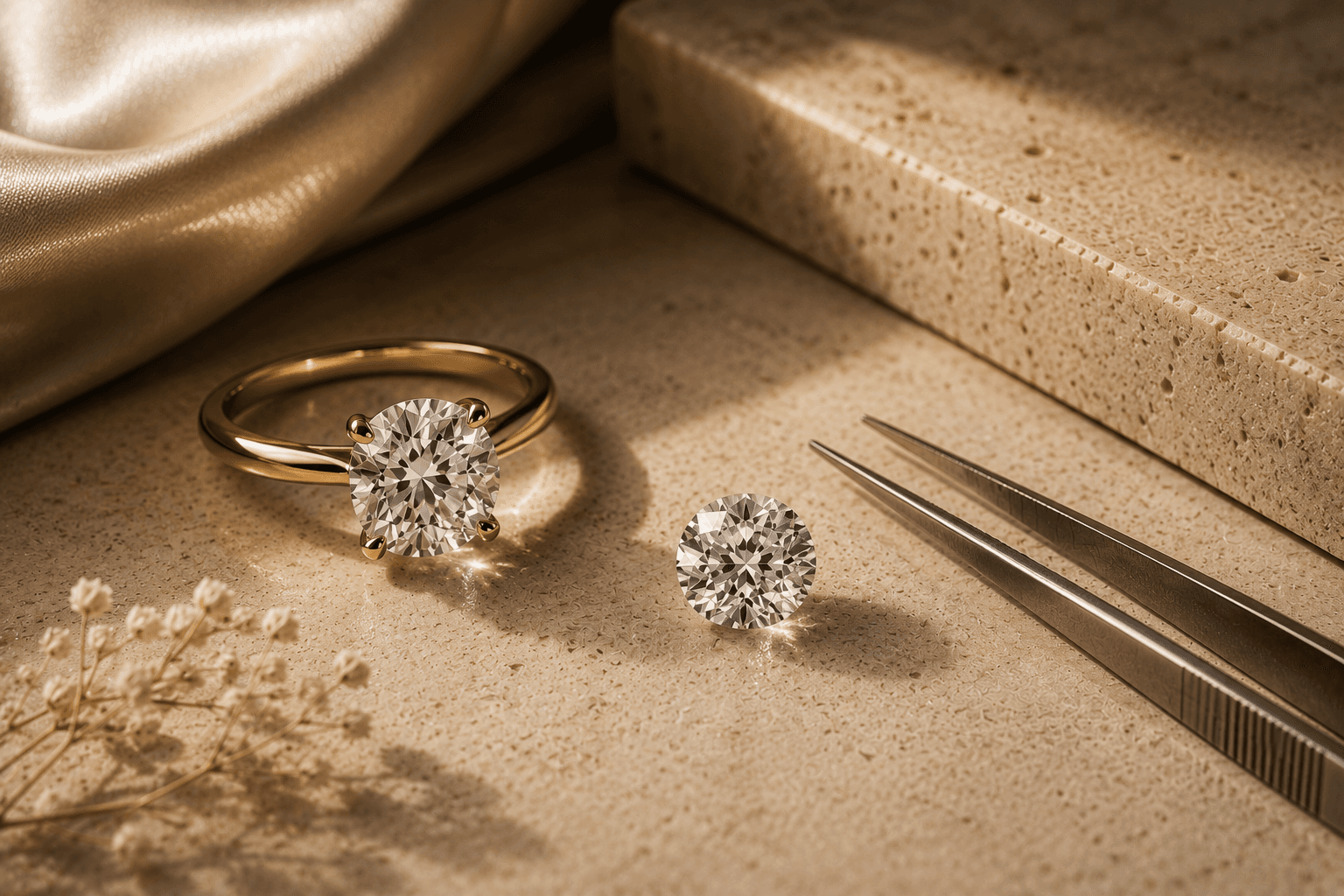
What Is a Round Diamond
The round diamond is the most recognized and traditional diamond shape used in engagement rings. Its perfectly circular outline and carefully engineered faceting are designed to maximize brilliance and fire.
Most round diamonds are cut as round brilliant diamonds. This cut typically features 57 or 58 facets arranged in a precise pattern that reflects light back through the top of the stone.
The goal of this design is simple: capture as much light as possible and return it to the viewer’s eye. When executed well, a round brilliant diamond produces the bright sparkle most people associate with diamonds.
Because of its balance of symmetry and light performance, the round diamond has remained the most popular engagement ring shape for generations.
Why Round Diamonds Are So Popular
Round diamonds have dominated the engagement ring market for decades, and their popularity has remained remarkably consistent.
One reason is familiarity. The round diamond has long been associated with classic engagement rings, making it a natural starting point for many buyers.
Another reason is light performance. The round brilliant cut was developed through careful study of how light travels through a diamond. As a result, it often produces more consistent sparkle than any other shape.
Round diamonds are also extremely versatile. Their symmetrical outline pairs well with almost any engagement ring design, from simple solitaires to intricate vintage settings.
For buyers seeking a timeless look with reliable brilliance, round diamonds continue to be the most trusted choice.
Understanding Round Brilliant Cut Quality
Cut quality is especially important when evaluating round diamonds.
Because round diamonds follow a well-defined set of proportions, gemologists have been able to study how small changes in angles and measurements affect light performance. What is diamond cut is the best place to start if you want the full cut framework.
This research led to grading systems that evaluate how well a round diamond handles light. A well-cut round diamond reflects light efficiently, creating strong brilliance and lively sparkle.
Poorly cut stones, on the other hand, may allow light to escape through the bottom or sides of the diamond. When this happens, the diamond can appear dull or lifeless.
For this reason, many jewelers place significant emphasis on cut quality when selecting round diamonds. How to read a diamond certificate shows where cut, polish, and symmetry appear on a round report.
Why Round Diamonds Often Cost More
Round diamonds typically carry the highest price per carat among all diamond shapes.
Part of this price difference comes from demand. Because round diamonds are the most widely purchased shape, they naturally command a premium in the marketplace.
Another factor is the cutting process. Creating a round brilliant diamond requires removing a significant portion of the original rough diamond. This means more material is lost during cutting compared to many other shapes.
Because of both demand and cutting efficiency, round diamonds tend to cost more than elongated shapes like oval or marquise diamonds of similar quality.
Even with the higher price, many buyers choose round diamonds because of their unmatched brilliance and classic appearance.
How Round Diamonds Look on the Hand
Round diamonds create a balanced and symmetrical look when worn on the hand.
Their circular outline centers the diamond visually, drawing attention to the brilliance of the stone rather than the shape itself.
This symmetry also makes round diamonds incredibly adaptable to different ring designs. Whether set in a thin solitaire band or surrounded by smaller diamonds, the shape maintains its elegance.
Round diamonds tend to feel timeless rather than trend-driven. Because of this, they often appeal to buyers looking for an engagement ring that will remain stylish for decades. If you are weighing how a round stone will read at different carat weights, Diamond Studio offers a useful preview across finger sizes.
For many people, the round diamond represents the most classic interpretation of an engagement ring.
Choosing a Beautiful Round Diamond
While round diamonds are easier to evaluate than many other shapes, several factors still deserve attention.
Cut quality remains the most important. A well-cut round diamond will display strong brilliance, crisp reflections, and balanced sparkle across the surface of the stone. Diamond Intelligence can help when you want to compare cut grades and proportions across candidate reports.
Symmetry is another important element. The facets should appear evenly aligned, and the overall shape should feel perfectly circular.
Clarity and color also influence the diamond’s appearance, but many buyers prioritize cut first because it has the greatest impact on visual performance.
When these characteristics come together, the result is a round diamond that feels bright, lively, and refined.
The round diamond remains the benchmark for brilliance in the diamond world. Its precisely engineered faceting produces a level of sparkle that few other shapes can consistently match.
Beyond its light performance, the round diamond carries a sense of tradition and familiarity that many engagement ring buyers appreciate.
While other shapes may offer unique silhouettes or larger face-up size, the round diamond continues to represent the classic standard of diamond beauty.
For those seeking timeless elegance and reliable brilliance, the round diamond remains one of the most enduring choices in engagement ring design. Begin with Concierge when you want help comparing round cut grades against oval or cushion alternatives.
Related topics
Continue Exploring
If you would like this applied to your own diamond or ring, a private conversation is available.