
Diamond Light Return Explained
By Justin Smith, Graduate Gemologist · Hourglass Diamonds
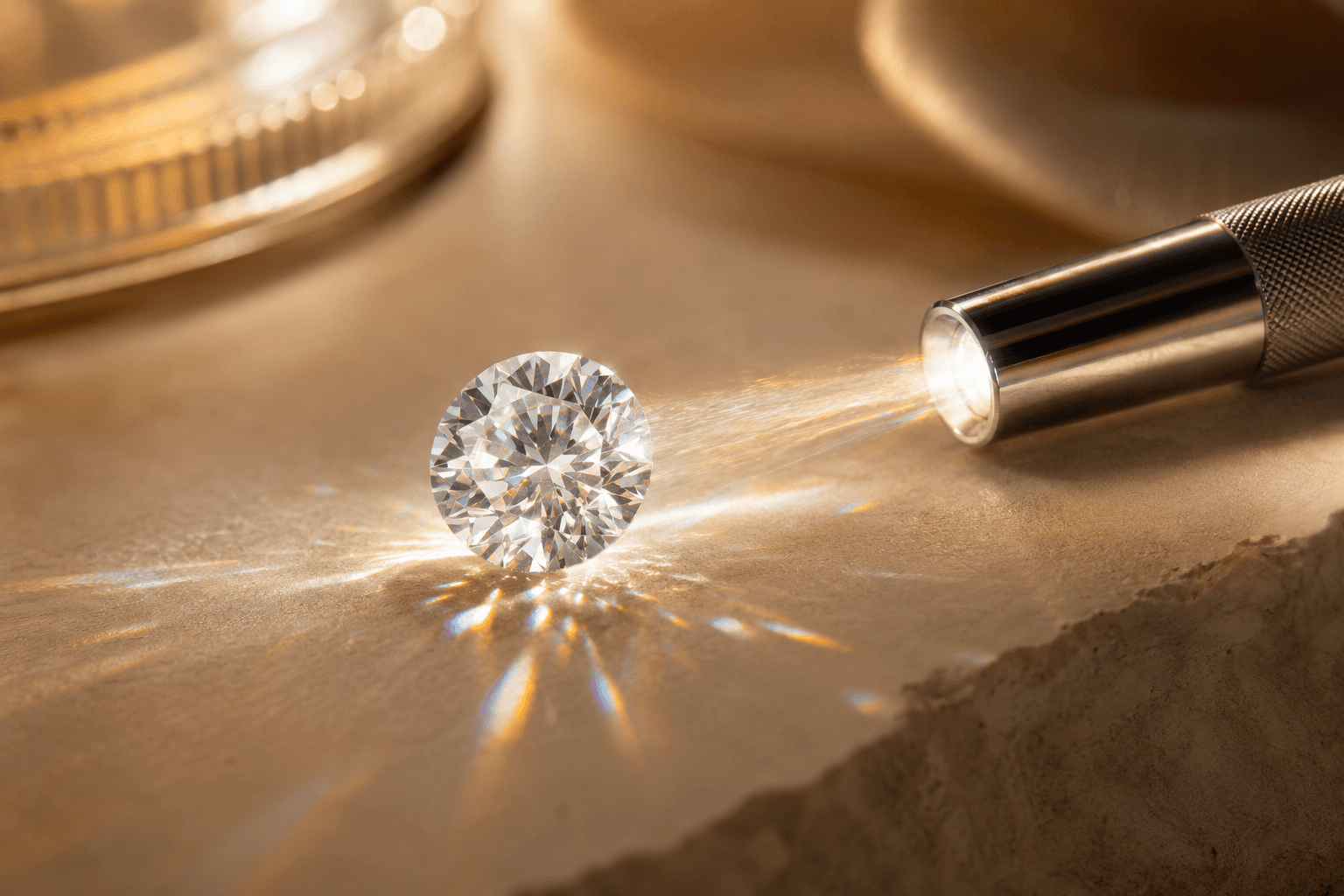
Light return is one piece of the cut story. For the full guide, including the GIA scale and Hourglass standards, see what is diamond cut. This article explains how efficiently a diamond reflects light back to your eye.
What Light Return Means in a Diamond
Light return describes how efficiently a diamond reflects light back toward the viewer’s eye. When light enters a diamond, it interacts with the stone’s internal facets. If those facets are positioned correctly, the light reflects within the diamond and exits through the top of the stone.
This returned light is what creates the brightness people associate with a beautiful diamond. When light return is strong, the diamond appears lively and luminous. When it is weak, the diamond may appear dull or muted.
Light return is one of the most important components of a diamond’s overall light performance.
How Light Travels Inside a Diamond
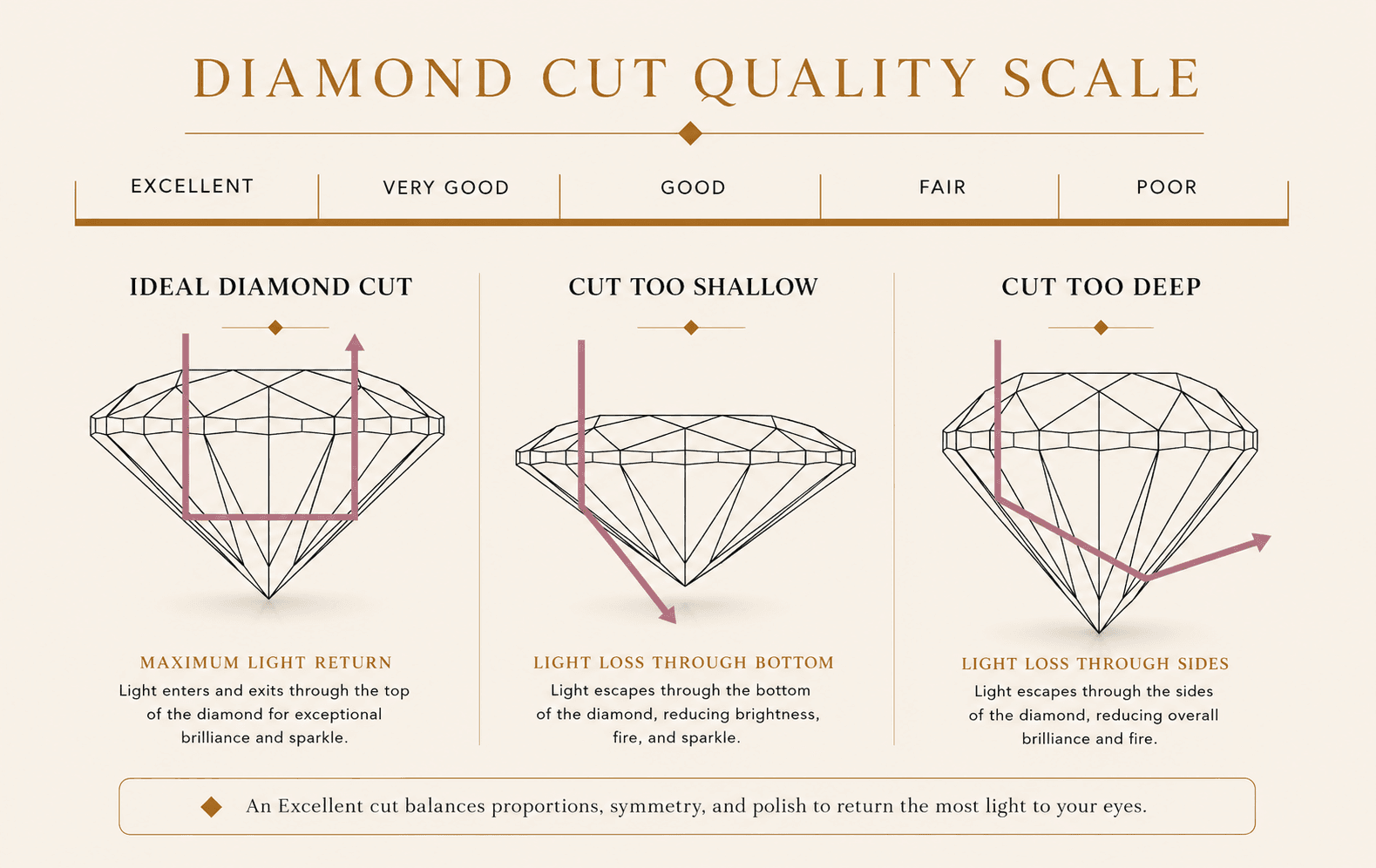
When light enters a diamond through the table and crown facets, it slows and bends due to the diamond’s high refractive index. This bending causes the light to reflect off the internal facets before exiting the stone.
Ideally, the internal reflections direct the light back toward the top of the diamond, where it becomes visible to the viewer. This process can happen multiple times inside the stone before the light exits.
If the angles are properly aligned, most of the incoming light will return upward. This creates the bright appearance that makes a diamond look vibrant and full of life.
What Causes Light Leakage
Light leakage occurs when light escapes through the bottom or sides of the diamond instead of returning through the top. This usually happens when the proportions of the diamond are not properly balanced.
If a diamond is cut too shallow, light may pass straight through the bottom of the stone. If it is cut too deep, light can bounce toward the sides and escape before reaching the viewer.
Both situations reduce the amount of light return. As a result, the diamond may appear darker or less lively than a well-proportioned stone.
Why Cut Quality Matters Most
Cut quality is the primary factor controlling light return. A diamond with excellent proportions allows light to enter, reflect internally, and return to the viewer in a balanced way.
Even diamonds with high color and clarity grades can look underwhelming if their cut quality is poor. Conversely, a well-cut diamond can appear remarkably bright even if its other characteristics are slightly lower.
For this reason, many experts consider cut to be the most important of the traditional diamond grading factors.
How Light Return Is Evaluated
Gemologists often use specialized tools to evaluate how efficiently a diamond returns light. Instruments such as light performance scopes can visualize where light enters and exits the stone.
These tools create patterns that reveal areas of strong light return and areas of leakage. A diamond with strong light return will show consistent brightness across most of its surface.
However, experienced jewelers also rely on direct observation. The human eye can often detect differences in brightness between diamonds even without specialized equipment.
The Relationship Between Light Return and Sparkle
Light return forms the foundation of a diamond’s sparkle. Without strong light return, the diamond cannot produce the brightness needed for brilliance, fire, and scintillation.
When light returns efficiently, the diamond appears bright and lively. This brightness allows colored flashes and dynamic sparkle to stand out more clearly.
In this way, light return supports the other visual effects that make diamonds so visually engaging.
Why Light Return Matters for Buyers
Many buyers focus on carat weight when comparing diamonds, but light return often has a greater influence on how impressive a diamond looks.
A slightly smaller diamond with excellent light return can appear brighter and more attractive than a larger diamond with poor proportions. Because of this, experienced jewelers often prioritize cut quality when selecting diamonds.
When light return is strong, the diamond displays the brightness and vitality that most people associate with exceptional stones.
Diamond light return refers to how efficiently a diamond reflects light back toward the viewer. When the proportions and facet angles are well balanced, light travels through the stone and exits through the top, creating a bright and lively appearance.
Cut quality plays the most important role in controlling this process. Understanding light return helps explain why some diamonds appear radiant and vibrant while others seem comparatively dull.
Related topics
Continue Exploring
If you would like this applied to your own diamond or ring, a private conversation is available.