
What Is an Emerald Cut Diamond
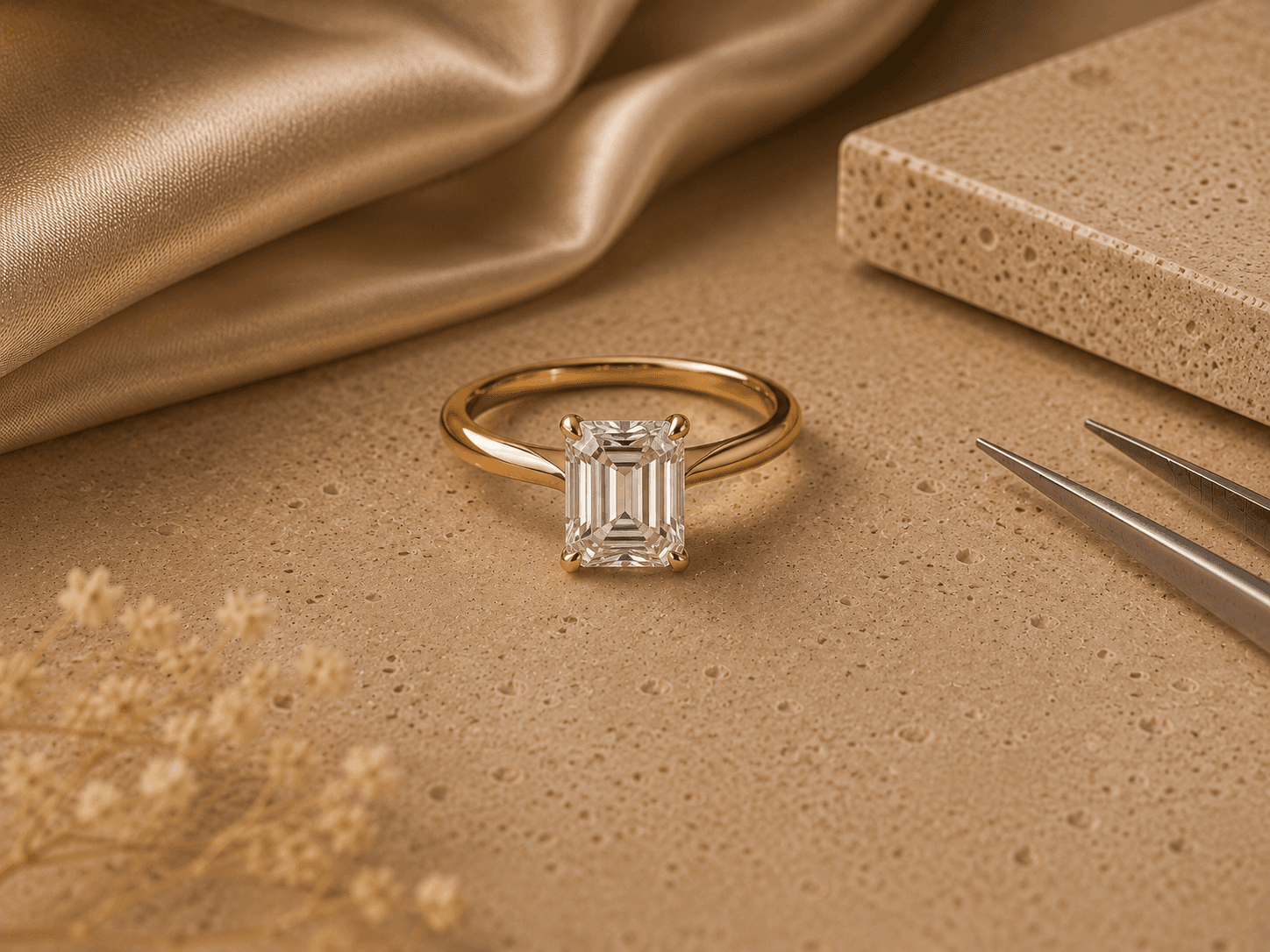
The emerald cut diamond is known for its refined geometry and understated elegance. Unlike brilliant-cut diamonds that focus on intense sparkle, the emerald cut emphasizes clarity, symmetry, and long flashes of light.
This shape is typically rectangular with cropped corners and a large open table. Inside the diamond, the facets are arranged in long parallel steps rather than triangular brilliant facets.
Because of this structure, emerald cut diamonds reflect light in broad flashes rather than small sparkles. Many people describe this effect as a “hall of mirrors,” where light travels across the stone in long, elegant reflections.
The result is a diamond that feels calm, architectural, and quietly sophisticated.
The Origins of the Emerald Cut
The emerald cut has its roots in the way emerald gemstones were historically cut.
Emeralds are more fragile than diamonds, so early gem cutters developed a rectangular step cut with trimmed corners to reduce the risk of chipping during cutting and setting.
Over time, diamond cutters adopted the same structure because it created a very different visual experience compared to brilliant cuts.
The step-cut pattern revealed the internal clarity of the stone while producing long flashes of light rather than rapid sparkle.
This distinctive style eventually became known as the emerald cut, and it remains one of the most recognizable diamond shapes today.
Understanding Step-Cut Diamonds
Emerald diamonds belong to a family of diamond shapes known as step cuts.
In a step-cut diamond, the facets are arranged in parallel rows that descend into the stone like steps. Instead of scattering light into many tiny reflections, these facets produce broad, mirror-like flashes.
This structure creates a very clean and transparent appearance. Because the facets are large and open, the viewer can often see deeper into the diamond.
For this reason, clarity becomes more noticeable in emerald cut diamonds than in many brilliant-cut shapes.
Rather than hiding imperfections with intense sparkle, the emerald cut celebrates the natural transparency of the stone.
How Emerald Diamonds Look on the Hand
Emerald diamonds create a very different visual presence compared to most other diamond shapes.
Their elongated rectangular form often appears graceful and sophisticated on the hand. The shape can also create a subtle lengthening effect on the finger. see how emerald proportions face up when you are deciding between square and elongated outlines.
Because the facets produce long flashes of light rather than constant sparkle, the overall look tends to feel calm and refined.
Many people appreciate this understated brilliance. Instead of overwhelming sparkle, the emerald diamond offers a sense of quiet luxury.
This balance of structure and elegance has made emerald diamonds especially popular among those drawn to minimalist and architectural jewelry design.
Why Clarity Matters More in Emerald Diamonds
Because emerald diamonds have large, open facets, the interior of the diamond is easier to see.
In brilliant-cut diamonds, numerous small facets scatter light in many directions, which can help disguise minor inclusions. Emerald diamonds do not hide imperfections in the same way.
This does not mean emerald diamonds must be perfectly flawless, but clarity often becomes more important when choosing a stone.
A well-selected emerald diamond should appear clean to the eye when viewed normally. Many buyers prioritize clarity slightly more in this shape to maintain the crisp and transparent look that defines the cut.
When clarity and cut quality come together, the result can be exceptionally elegant.
Designing Engagement Rings with Emerald Diamonds
Emerald diamonds pair beautifully with a wide range of engagement ring styles.
In solitaire settings, the diamond’s geometry becomes the focal point of the ring. The clean lines and long facets create a strong visual presence even without additional embellishment.
Three-stone designs are also popular with emerald diamonds. Tapered side stones or trapezoid diamonds often complement the rectangular center stone beautifully.
Minimalist bands frequently highlight the architectural feel of the emerald cut, while vintage-inspired settings can add delicate detail around the stone.
Because of their strong lines and symmetry, emerald diamonds often look particularly striking in refined, understated designs.
Choosing a Beautiful Emerald Diamond
When selecting an emerald diamond, several characteristics deserve attention. Cut quality and proportion matter differently for step cuts than for rounds, which is why what is diamond cut is worth reading before relying on a report summary alone.
Proportions influence the overall appearance of the stone. Some emerald diamonds appear longer and slimmer, while others feel slightly wider. Personal preference usually determines which ratio feels most appealing. How to read a diamond certificate shows where length-to-width and depth appear on the report.
Symmetry is extremely important. The step facets should align evenly, and the diamond should appear balanced from end to end.
Clarity should also be considered carefully. Because the cut reveals more of the interior structure, buyers often choose diamonds that appear visually clean. What is diamond clarity explains how eye cleanliness works for open-facet shapes.
Finally, the diamond should display attractive light reflections across the step facets rather than appearing dull or flat.
When these elements come together, the emerald diamond can display remarkable elegance.
The emerald cut diamond offers a distinctive alternative to the sparkle-driven brilliance of many other shapes.
Its step-cut facets create long, elegant flashes of light and reveal the natural clarity of the stone. This transparency gives the diamond a calm, refined presence.
For engagement ring buyers drawn to clean lines and understated luxury, the emerald diamond often feels especially appealing.
When carefully selected, an emerald cut diamond can produce a ring that feels timeless, sophisticated, and quietly striking. Concierge can help you compare emerald candidates when clarity, proportions, and setting style need to be weighed together.
Related topics
Continue Exploring
If you would like this applied to your own diamond or ring, a private conversation is available.