
What Is an Asscher Cut Diamond
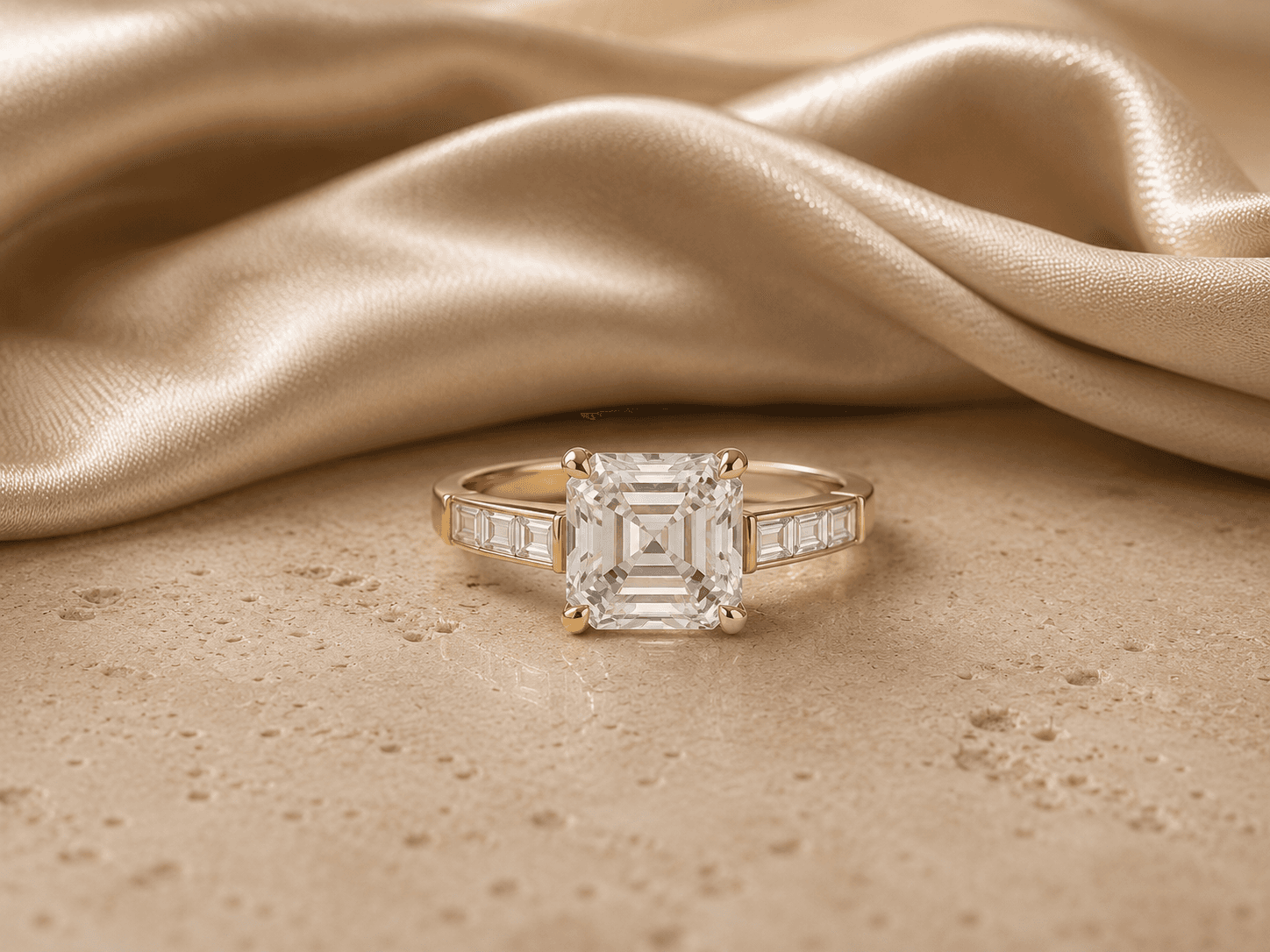
The Asscher cut diamond is known for its distinctive geometry and vintage character. At first glance it appears similar to an emerald cut, but the Asscher shape is square rather than rectangular and features deeply trimmed corners that create an octagonal outline.
Inside the diamond, the facets are arranged in a step pattern rather than a brilliant pattern. These long, layered facets reflect light in broad flashes rather than the rapid sparkle seen in brilliant-cut diamonds.
Because of this structure, Asscher diamonds produce a striking visual effect often described as a hall of mirrors. Light reflects down through the diamond in repeating steps, creating depth and symmetry.
The result is a diamond that feels architectural, refined, and unmistakably classic.
The History of the Asscher Cut
The Asscher cut was developed in 1902 by Joseph Asscher, a member of the Asscher family of diamond cutters in Amsterdam.
At the time, the design represented a new interpretation of the step-cut diamond. The Asscher family refined the traditional emerald cut by creating a square version with more dramatic corner cuts and deeper internal facets.
The cut quickly became popular during the Art Deco period, when geometric jewelry styles were widely celebrated.
Over the years, the Asscher cut became closely associated with vintage jewelry and early twentieth-century design.
Modern versions of the cut have since been refined to improve brilliance while maintaining the distinctive stepped structure that defines the shape.
Understanding the Step-Cut Appearance
Asscher diamonds belong to the step-cut family of diamonds.
Instead of numerous small facets designed to scatter light, step-cut diamonds use long parallel facets that descend into the center of the stone.
These facets create broad reflections that move slowly across the surface of the diamond as it shifts under light.
This gives the Asscher diamond a calm and sophisticated personality compared to the energetic sparkle of brilliant-cut diamonds.
Because the facets are large and open, the interior of the diamond is often clearly visible. This transparency contributes to the clean and structured appearance that many people appreciate.
Why Symmetry Is So Important
Symmetry plays a particularly important role in the beauty of an Asscher diamond.
Because the cut relies on geometric precision, any imbalance in the facets can become noticeable when the diamond is viewed face-up.
In a well-cut Asscher diamond, the step facets should align evenly and create a repeating pattern that draws the eye toward the center of the stone.
The diamond should also appear balanced from all sides, with corners that match in both size and angle.
When the symmetry is well executed, the result is a diamond that feels precise, elegant, and visually harmonious.
Clarity Considerations
Due to the open structure of step-cut facets, clarity is often more visible in Asscher diamonds than in many other shapes.
Brilliant-cut diamonds scatter light in ways that can help hide small inclusions. Asscher diamonds, however, allow the viewer to see deeper into the stone.
This does not mean the diamond must be flawless, but it is generally helpful to choose a stone that appears clean to the eye.
A diamond with good clarity will allow the step facets to remain crisp and uninterrupted, which enhances the hall-of-mirrors effect that makes the Asscher cut so distinctive.
How Asscher Diamonds Look in Engagement Rings
Asscher diamonds create a strong visual presence when set in engagement rings. Their square outline and deep facets produce a structured look that feels both vintage and refined. compare how an Asscher faces up on the hand if you are weighing it against a round or emerald outline.
Their square outline and deep facets produce a structured look that feels both vintage and refined.
In solitaire settings, the diamond’s geometry becomes the clear focal point. The stepped reflections draw attention inward, emphasizing the depth of the stone.
Three-stone designs are also common with Asscher diamonds, often featuring tapered side stones that complement the square center.
Because of their Art Deco heritage, Asscher diamonds frequently appear in vintage-inspired rings with detailed metalwork and milgrain edges.
Choosing a Beautiful Asscher Diamond
When selecting an Asscher diamond, proportions and symmetry are key considerations. Asscher diamonds rarely receive a single overall cut grade, so what is diamond cut is useful context for judging craftsmanship beyond the outline.
The shape should appear balanced, with evenly trimmed corners that form a clear octagonal outline. Length-to-width and depth figures on how to read a diamond certificate help explain what you are seeing face-up.
The step facets should align precisely and reflect light in a clean, repeating pattern.
Clarity should also be evaluated carefully so the interior of the diamond appears bright and uninterrupted. What is diamond clarity explains why open step facets make eye cleanliness especially important.
Finally, the diamond should display attractive reflections as it moves under light, rather than appearing dark or flat.
When these elements come together, the Asscher diamond can display remarkable elegance and depth.
The Asscher diamond stands apart from most other shapes because of its distinctive step-cut structure and vintage heritage.
Its layered facets create long reflections that feel calm, precise, and architectural. Rather than overwhelming sparkle, the diamond offers a quiet and refined brilliance.
For engagement ring buyers drawn to geometric elegance and historical character, the Asscher cut can be a compelling choice.
When carefully selected, an Asscher diamond can create a ring that feels timeless, sophisticated, and deeply distinctive. Speak with Concierge if you want help comparing Asscher candidates against emerald or radiant options.
Related topics
Continue Exploring
If you would like this applied to your own diamond or ring, a private conversation is available.