A useful size chart connects carat weight to the millimeter measurements that describe face-up spread. Weight tells you how much diamond you are buying. Millimeters tell you how much of the finger the stone will cover.
Those two ideas are related, but they are not the same. Much of a diamond's weight can sit below the girdle, out of view once the stone is set. That is why two diamonds with identical carat weights can look meaningfully different on the hand.
Carat Weight and Face-Up Size
Carat is a unit of weight, not diameter. If you need a clear definition of the term, what is a carat explains how weight is measured and why the number on a report is only part of the story.
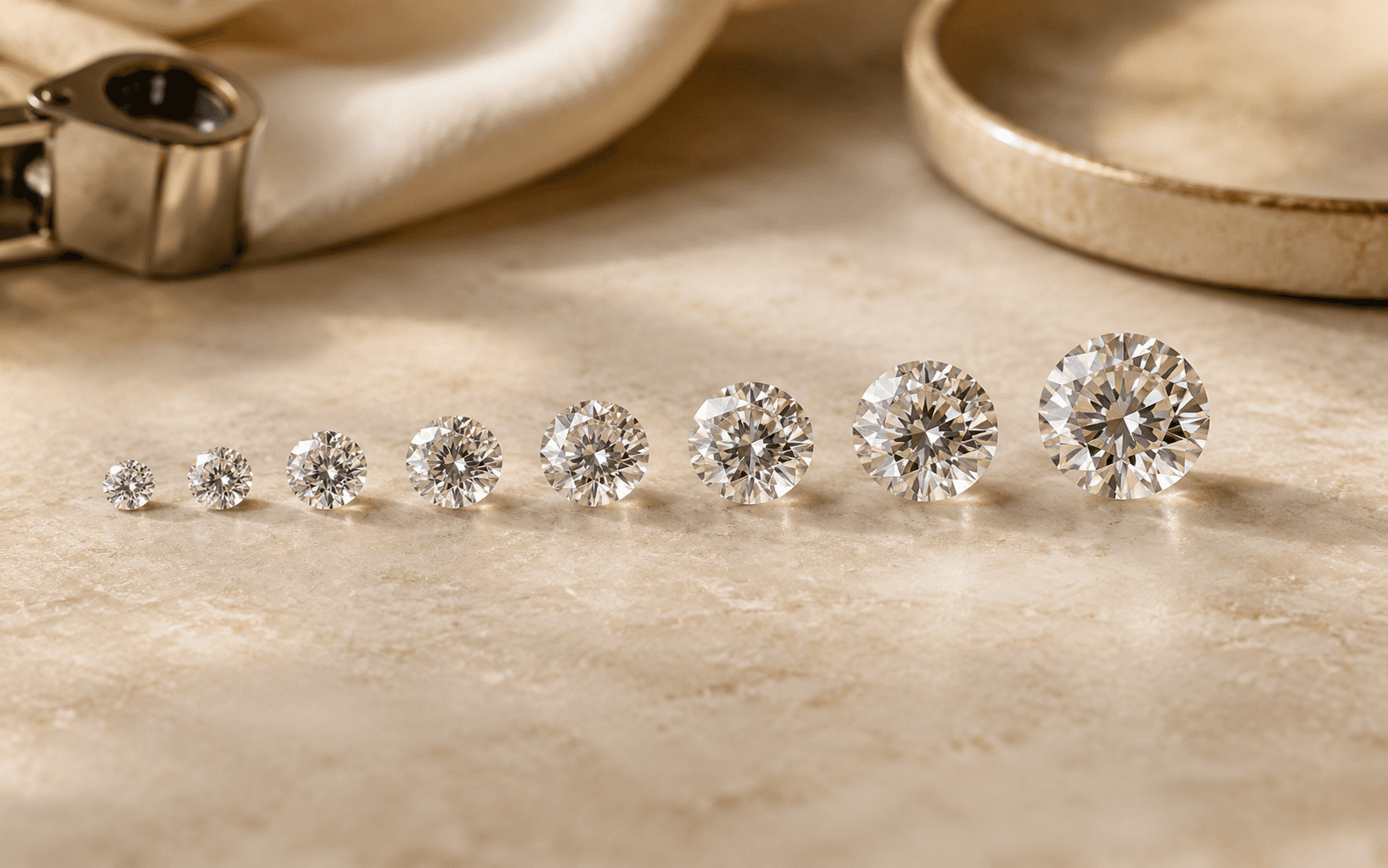
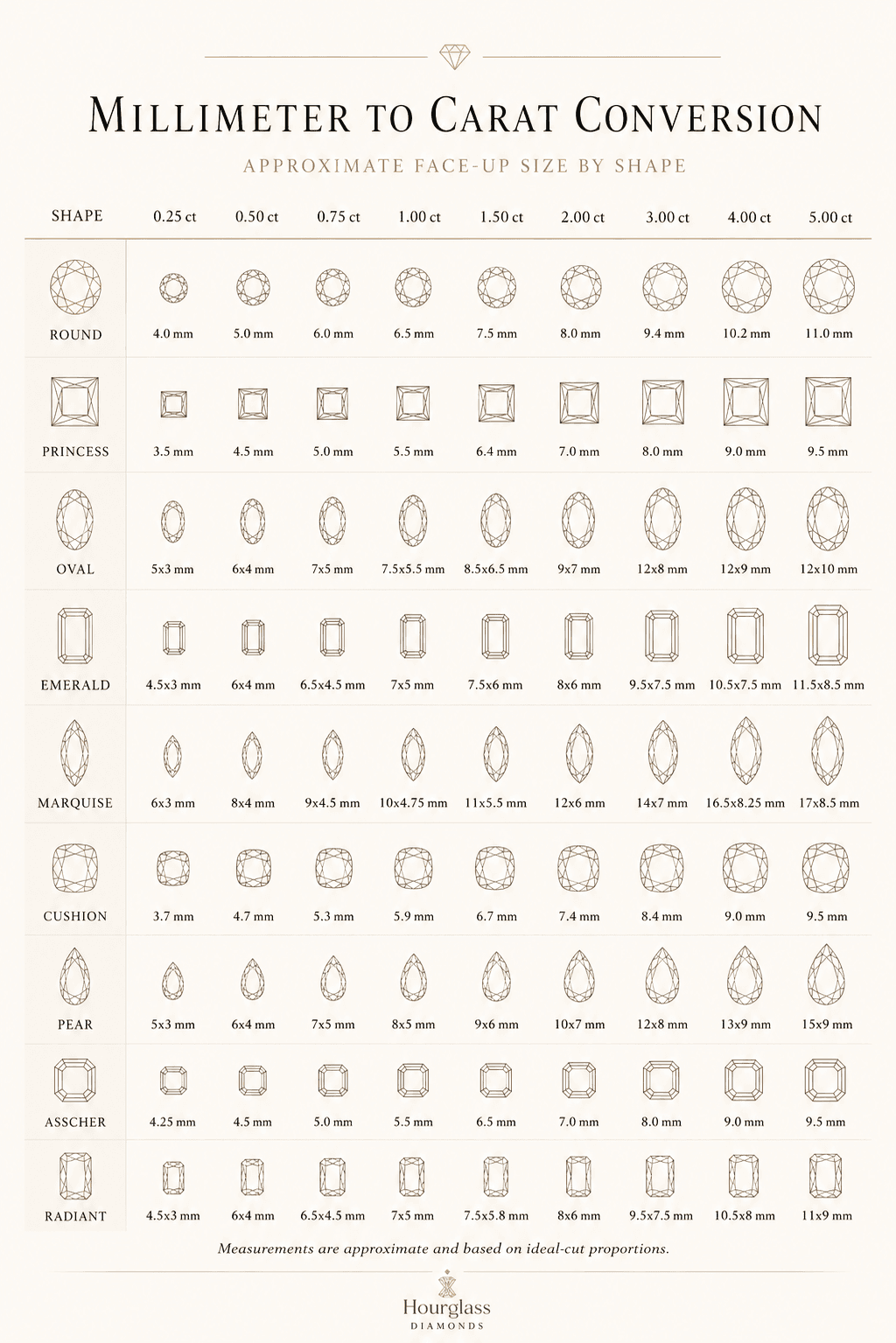
For round brilliant diamonds with balanced proportions, common reference points include roughly 6.5 mm at one carat and about 8.1 mm at two carats. Cut quality shifts those numbers. A deeper stone may weigh more while covering less surface area. Our guide to diamond carat vs size walks through that distinction in more detail.
Why Millimeter Measurements Matter
Millimeter measurements describe the physical dimensions of the diamond as you see it from above. Length and width, not weight, determine how the stone reads in an engagement ring.
This is what experienced jewelers review after carat weight. Two stones can share a certificate summary and still deliver different presence depending on how weight is distributed through the pavilion and how efficiently the cutter preserved face-up spread.
How Shape Influences Diamond Size
The measurements above apply primarily to round brilliant diamonds. Other shapes distribute weight differently, which changes visible spread even at the same carat weight.
Elongated shapes such as oval, marquise, and pear often cover more length across the finger. Square shapes such as cushion or princess cuts may face up slightly smaller because more weight sits toward the center of the stone. What diamond shape looks the largest and do elongated diamonds look bigger compare those face-up tendencies in more detail.
Same Carat · Different Face-Up Character
- Round
- Balanced spread with even proportions across the finger.
- Oval
- Often appears larger north to south, with an elegant lengthening effect.
- Emerald
- Larger outline with a quieter, step-cut brilliance.
- Cushion
- Can face up smaller depending on depth and facet pattern.
- Marquise
- Strongest length impression, with weight carried toward the points.
These are general tendencies. Individual cut proportions can shift how a stone actually faces up.
See It on the Hand
Charts orient the conversation. The Diamond Size Studio lets you compare shapes and carat weights across finger sizes before you view stones in person.
Why Cut Proportions Matter
Cut proportions influence both brightness and visible spread. A well-proportioned diamond distributes weight efficiently and returns light effectively, which often makes the stone appear larger and more lively. What is diamond cut is the full performance guide; does diamond cut affect size focuses on how depth and spread change face-up millimeters.
Diamonds with poor proportions may hide weight in the lower portion of the stone, reducing both sparkle and the face-up size you actually see in the setting.
Finger Coverage and Presence
Carat weight alone does not define how a diamond feels on the hand. Finger size, shape, and cut proportions work together to create what we describe as presence: the scale of the stone relative to the wearer.
A one-carat diamond may read as quietly refined on a larger hand, clearly noticeable on a medium finger, or confidently statement-making on a smaller one. The same weight lands differently depending on context.
If you are narrowing toward a target size, best carat size for an engagement ring offers a calm framework for balancing presence, wearability, and budget.
A size chart is a starting reference, not a verdict. Shape, cut quality, and millimeter spread all influence the final impression once the diamond is set.
Use the measurements here to orient your search, then compare how candidates actually look on the hand. When numbers and appearance need to be weighed together, a private Concierge conversation can help clarify what will feel balanced for your ring.
Related topics
Continue Exploring
If you would like this applied to your own diamond or ring, a private conversation is available.