
Gemstone Education
Your Guide to Colored Gemstones
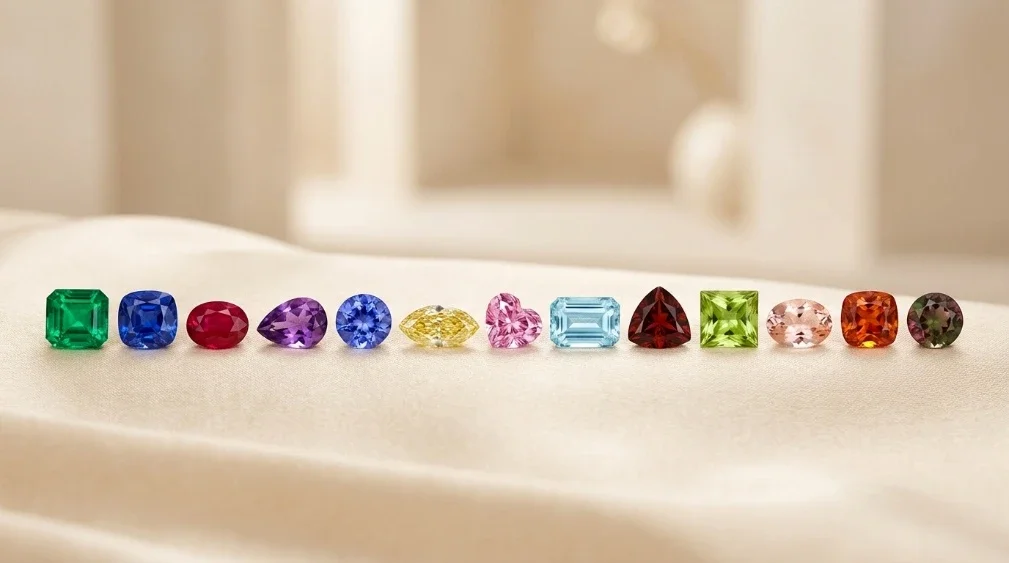
Every color, every facet, every sparkle tells a story. Discover what defines true rarity and refined beauty in the world of colored gemstones.
Understanding Colored Gemstones
Colored gemstones possess unique charm and complexity that sets them apart from diamonds. Unlike diamonds with standardized grading, colored gemstone evaluation follows three essential principles: hue, tone, and saturation. Whether selecting a gemstone for a custom engagement ring or personalized pendant, understanding these characteristics empowers informed decisions.
Hue: The Gemstone's Dominant Color
Hue represents the primary color you perceive, red, blue, green, yellow, or combinations thereof. Most gemstones display secondary color modifiers. For example, sapphires may show pure blue, blue-violet, or greenish-blue hues. Common hue categories include pure hues (ruby red, sapphire blue) and modified hues (purplish-red, orangish-pink). Understanding these nuances helps articulate exactly what you're seeking.
Tone: Light to Dark Intensity
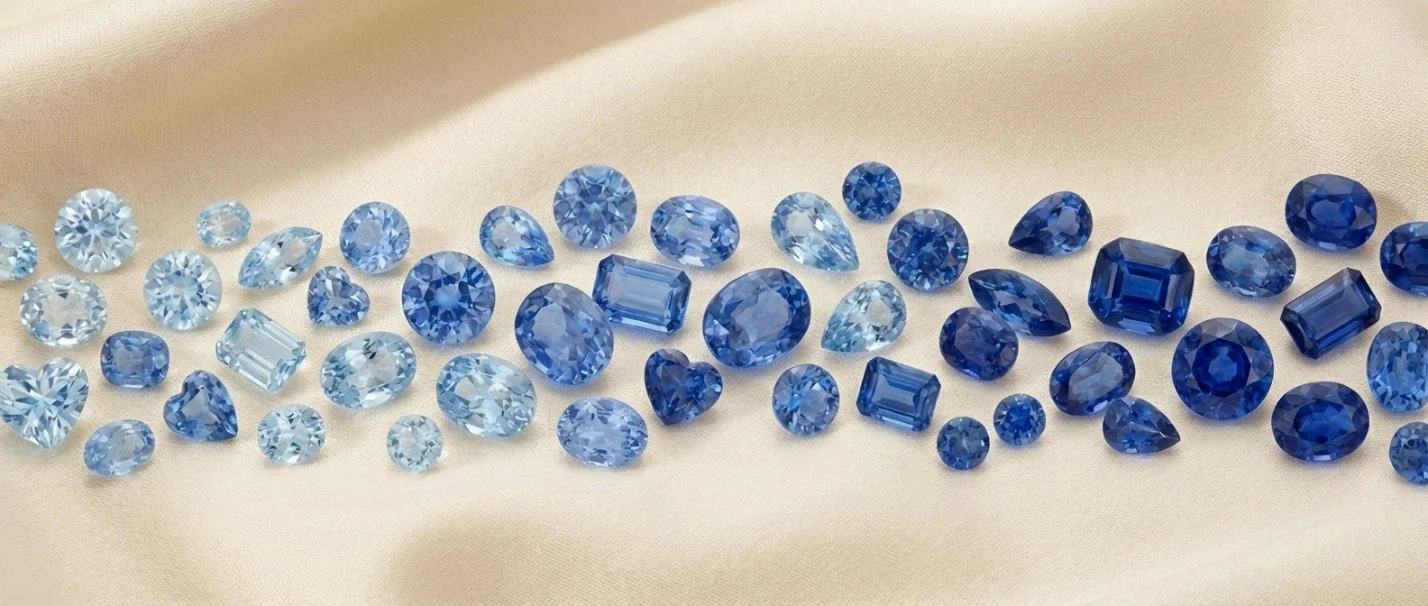
Tone describes how light or dark a gemstone appears on a scale from colorless (0) to very dark (10). The most desirable range typically falls between medium (5) and medium-dark (7), where color displays beautifully while maintaining brilliance. Tone preferences vary by gemstone type and personal taste. Light aquamarines offer delicate beauty, while deeply saturated emeralds command attention.
Saturation: Color Strength and Purity
Saturation measures color intensity, how vivid or muted a gemstone appears. In gemology, saturation ranges from vivid (most valuable) to weak (least valuable). Gemstones with vivid to strong saturation command premium prices because they display color at its most captivating intensity. Perfect saturation balance ensures your gemstone's character shines brilliantly.
What Affects Colored Gemstone Value?
Unlike diamonds, colored gemstones have no universal price list. Each stone is valued individually based on:
- Rarity of color: Burmese rubies and Kashmir sapphires are prized for their famously rare hues.
- Saturation intensity: The more vivid and intense the color, the more valuable the gemstone tends to be.
- Ideal tone: Medium to medium-dark tones are generally the most sought-after.
- Carat weight and origin: Bigger stones and prestigious origins can significantly impact value.
- Treatment status and clarity: Untreated stones with high clarity are typically worth more.
Choose Your Perfect Gemstone
The most important truth, the best gemstone is the one that speaks to you. Color preference is deeply personal. Whether drawn to fiery red rubies, serene blue sapphires, or vibrant emeralds, your journey is an exploration of personal taste and timeless appeal.